Get a Ready-to-Ship Pavilion Delivered to Your Door In Just 4 Weeks!
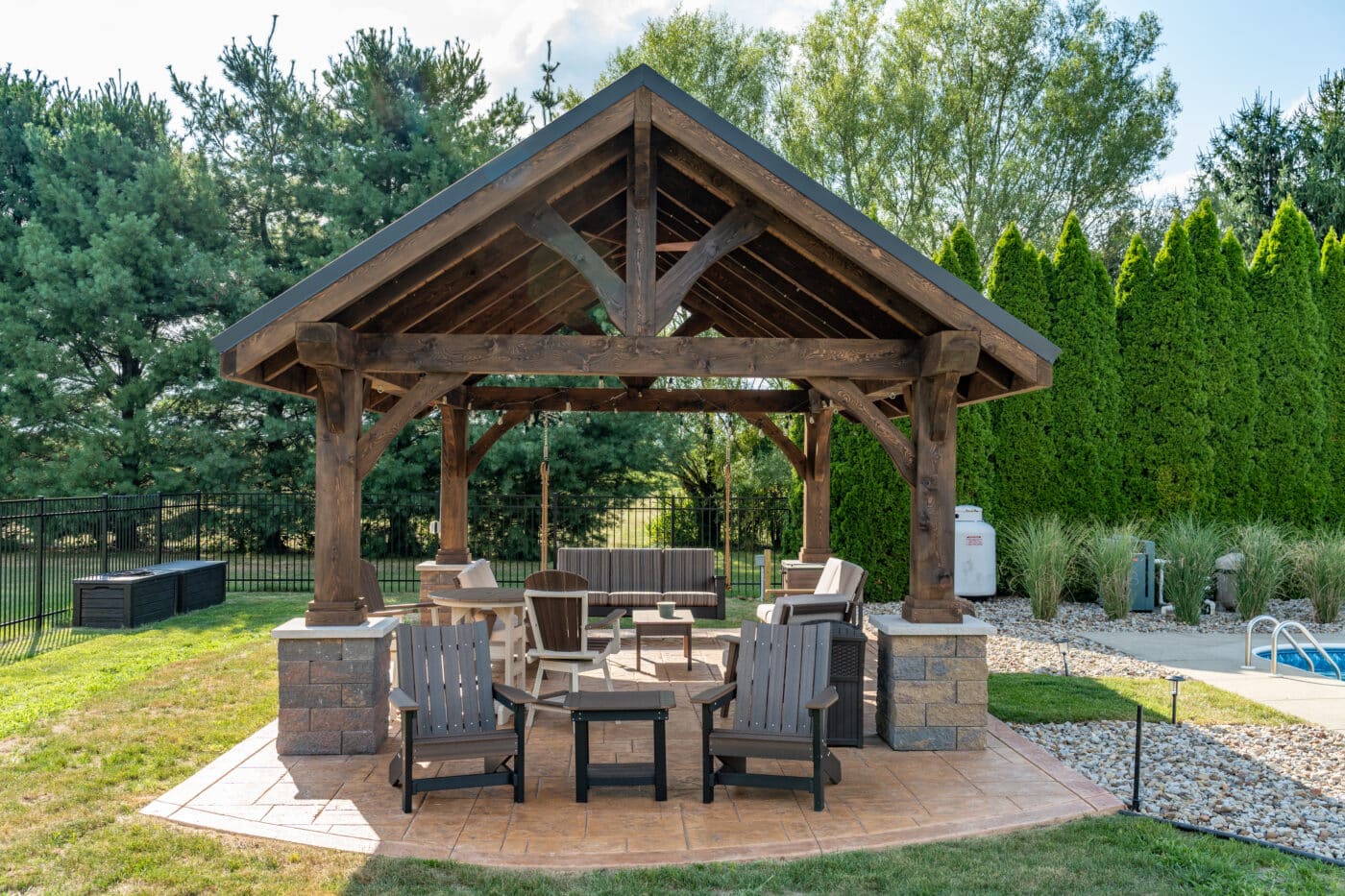


If you are planning to add a pergola or pavilion to your backyard in New York, one of the first questions is whether you need a permit. While these outdoor structures can enhance your space for entertaining, relaxing, or increasing property value, local building regulations may apply before construction begins. In many New York municipalities, permits are required depending on factors such as the structure’s size, whether it is attached to your home, and whether it includes electrical work or a permanent foundation.
Understanding when a permit is required can help you avoid delays, fines, or having to modify or remove the structure later.
In New York, you will typically need a building permit for a pergola if the structure exceeds about 120 square feet, stands taller than roughly 8 to 10 feet, is attached to your house, or includes electrical or plumbing installations. Smaller freestanding pergolas may sometimes be exempt from permit requirements. However, regulations can differ by municipality, so it is important to review local zoning rules in your area, whether you live in New York City, a town on Long Island, or another community across the state.
In New York, a pavilion usually requires a building permit if the structure is larger than about 100 to 150 square feet, rises higher than 10 feet, or involves electrical or plumbing installations. For pavilions used in public parks, a special event permit is typically required when gatherings include 20 or more people or when reserving a specific designated area.

Yes, in New York, you will often need a different and typically more strict permit for a pavilion than for a pergola. Because pavilions have a solid roof, they are often classified as permanent structures. This usually means a building permit is required, especially if the pavilion includes electrical work or is larger than about 100 to 200 square feet. Pergolas are sometimes exempt when they are small and open-roofed. However, larger pergolas may still require permits depending on local municipal regulations.
Several key factors can affect whether a permit is required for a pavilion or a pergola, and the rules can differ depending on the structure:
Always check with your local building department before starting construction to confirm the exact requirements for your specific structure and location.
One of the more challenging parts of building a pergola or pavilion in New York is navigating the varied local regulations that differ widely between cities, towns, and villages. What may be allowed in one municipality could require additional approvals or even be restricted in another, making your specific location an important factor in the permitting process.
| Albany | Buildings & Regulatory Compliance |
| Binghamton | Building Construction & Code Enforcement |
| Buffalo | Department of Permit and Inspection Services |
| Ithaca | Planning & Development Board |
| Mount Vernon | Buildings |
| New Rochelle | Buildings |
| New York City | NYC Department of Buildings |
| Niagara Falls | Code Enforcement |
| Rochester | Burau of Buildings & Compliance |
| Schenectady | Building Inspector/ Code Enforcement |
| Syracuse | Permits |
| Troy | Building Permits |
| Utica | Codes Compliance |
| White Plains | Building Permits & Applications |
| Yonkers | Housing & Buildings |
| Albany County | County Department & Office Listing |
| Broome County | Planning & Economic Development |
| Dutchess County | Planning & Development |
| Erie County | Environment & Planning |
| Monroe County | Planning & Development |
| Nassau County | Community Development |
| Onandanga County | Department of Planning |
| Orange County | Planning |
| Rockland County | Planning |
| Suffolk County | Department of Economic Development & Planning |
| Westchester County | Department of Planning |
| Niagara County | Department of Economic Development |
| Ulster County | Department of Planning |
| Schenectady County | Economic Development & Planning |
| Tompkins County | Planning & Sustainability |

Yes, constructing a permanent structural pavilion in Albany County usually requires a building permit because most accessory structures are regulated. Very small, temporary, or purely decorative structures might be exempt. However, it is best to verify with your local municipal building department, whether it is the Town, City, or Village, to confirm the exact size limits and zoning rules that apply.
A building permit is typically required to build a permanent roofed pavilion in Orange County, NY, because it is classified as a residential accessory structure. You will usually need to provide a site plan, construction drawings, and sometimes truss engineering documents to the local building department. Since requirements can differ by municipality, it is recommended to contact your town’s building inspector to confirm the exact requirements.
Constructing a permanent pavilion, gazebo, or similar structure in Westchester County usually requires a building permit from the local municipal building department because it is considered a permanent structural addition. In addition, if you plan to use a pavilion located in a county park, you will need to obtain a group picnic permit or make a reservation through the county.
A permit is usually required for a pavilion in Niagara County, NY. For county-owned parks, this often includes a signed rental agreement and a fee, with reservations typically opening on March 1. Permits for building structures may also be required, depending on the size of the pavilion and local zoning regulations. In certain municipalities, such as the Town of Niagara, formal approval may be necessary, and proof of insurance could also be required.

In New York, one of the first things inspectors review is how a pergola is secured to the ground. If you are installing a freestanding pergola, it typically must be anchored with proper footings that extend below the local frost line to prevent movement caused by freezing and thawing. In many parts of New York, this means digging footings about 36 to 48 inches deep and using concrete piers or approved metal anchors for stability. A pergola that is not properly anchored can pose a safety risk during strong winds and may also fail under heavy snow loads.
Pergolas are usually classified as accessory structures and must follow local zoning rules. They commonly need to be set back at least 3 feet from side and rear property lines, and their height is often limited to around 15 feet. Although smaller structures under about 120 to 200 square feet may sometimes be exempt from permit requirements, local regulations still apply. In areas such as New York City, zoning rules are stricter and often require compliance with rear yard spacing, lot coverage limits, and height restrictions.
Pergolas in New York must follow local building codes and structural requirements. Because the state can experience strong wind gusts and heavy snow accumulation, many pergolas must be engineered to handle wind speeds of roughly 90 to 110 mph and snow loads that can range from about 20 to over 70 PSF, depending on the region. In most municipalities, a permit is required for structures larger than 120 square feet or taller than about 8 to 10 feet.
Fire safety requirements for pergolas in New York typically include keeping at least 7 to 8 feet of vertical clearance between a fire pit and any overhead structure. Materials should be noncombustible or fire-resistant, such as metal components or properly treated wood. Adequate ventilation is also important, which generally means having at least two open sides to allow smoke and heat to escape. In New York City, additional rules apply, including the requirement that combustible structures use Class A-rated roof coverings to meet fire safety standards.
In New York, HOA and neighborhood regulations for pavilions and pergolas usually require homeowners to obtain approval from an Architectural Review Committee before construction. These rules often require compliance with specific setback distances, size limits, and approved building materials. Structures larger than about 100 to 120 square feet or taller than roughly 10 to 12 feet commonly require a building permit. In addition to municipal regulations, HOAs may impose additional restrictions on placement, height, colors, and design features to ensure the structure fits the neighborhood’s overall appearance.

Before starting the permit process for a pergola in New York, it is important to understand what the local building department requires. Although very small detached structures may sometimes be exempt, most pergolas require permits to ensure the foundation and overall construction meet local building codes. The steps below outline the typical process homeowners follow when applying for a pergola permit in New York.
Reach out to your local city, town, or village building department to confirm whether your pergola project requires a permit. Requirements are often based on factors such as size, commonly if the structure is larger than about 100 to 120 square feet, or if it will be attached to your home. If you live in a community with a homeowners association, you should also review HOA guidelines to see if additional approvals are needed.
Create a site plan or property survey that clearly shows where the pergola will be placed on your property. The plan should include property boundaries, any easements, and the required setback distances from property lines. This information helps the building department verify that the structure meets local zoning and placement regulations.
Develop detailed construction drawings that outline the pergola’s design and structural details. These plans should include accurate dimensions, the materials that will be used, and the method of anchoring the structure, such as concrete footings or approved ground anchors. Providing this information helps the building department confirm that the pergola meets local building and safety standards.
Submit the completed application package to your local building department, either through an online portal or in person. Be prepared to pay the required permit fee, which is often between $50 and $200, depending on the municipality.
The building department will examine your submitted plans to ensure the proposed pergola meets local building codes, zoning rules, and safety requirements before approving the permit.
After your application is approved, you will receive the building permit that allows construction to begin. You should also arrange any required inspections with the building department, which often include a foundation inspection and a final inspection once the pergola is completed.
Building a pergola without obtaining the required permit can result in penalties, including fines, stop-work orders, or the requirement to remove the structure. If the pergola does not comply with zoning regulations or safety codes, the local municipality may order it removed. It can also create problems when selling your home, potentially leading to insurance complications or conflicts with neighboring property owners.

In New York, pergolas and pavilions may be allowed without a permit when they are small, detached, and not considered permanent structures. Many municipalities set size limits, often around a specific square footage limit, though the exact threshold can vary by location. These structures are commonly made from wood, vinyl, or aluminum kits, and many manufacturers provide pre-engineered designs that meet general safety guidelines. Even so, it is important to check with your local town or village building department to confirm the rules before installing one.
Yes, most municipalities require a building permit for pergolas, especially if the structure is larger than about 100 to 120 square feet, attached to a home, or includes a permanent foundation. Smaller detached structures may sometimes be exempt, but local rules vary.
Building without a required permit can lead to fines, stop work orders, or being required to remove the structure. It may also create problems during home sales or insurance claims if the structure was not approved.
Yes. Pavilions usually have a solid roof and are considered more permanent structures, which almost always require a building permit and stricter compliance with structural, snow load, and wind load requirements.
Setback requirements vary by municipality, but accessory structures like pergolas typically must be placed a few feet away from side and rear property lines. Many towns require at least a 3-foot setback, though larger structures may require greater distances.
Footings usually must extend below the frost line to prevent shifting during freeze-thaw cycles. In many parts of New York, this means footings are typically 36 to 48 inches deep.
Enhancing your outdoor space with a pergola or pavilion can create a comfortable place to relax, entertain, and enjoy your property year-round. If you are looking for high-quality structures in New York, Enduria Structures offers a range of durable pergolas and pavilions designed for both style and long-lasting performance. Whether you want to add shade to your backyard, build an outdoor gathering area, or improve the overall look of your property, our structures provide a practical and attractive solution. Explore our available designs and find the right pergola or pavilion for your outdoor space.
A build from Enduria Structures can elevate your property’s appearance while adding practical use. From pergolas and pavilions to other custom outdoor structures, each option creates a comfortable space for relaxing, entertaining, or enhancing your outdoor setup.